Race, Gender, and the Medicalization of Mental Health and Modern American Literature
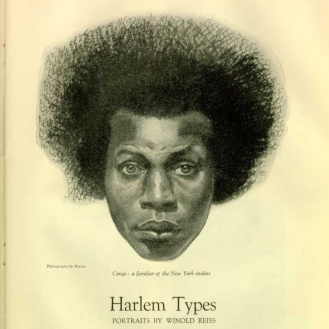
First page to “Harlem Types” portraiture by Winold Reiss. Survey Graphic, March 1, 1925, 651.
Pathologies of Character chronicles the history of psychiatric profiles at the nexus of American literary modernism and the medicalization of mental health in the early twentieth-century US. Modernist fiction writers both adopt and resist emerging scientific models of psychopathology in imagining their characters. Modernist authors crucially depart from their clinical counterparts, however, when they dramatize the uniquely detrimental consequences of such frameworks for women, sexual minorities, and non-white subjects. I establish how four such clinical types inspire modernist writers to reinvent the aesthetics of literary character. I look in turn at the chlorotic girl and turn-of-the-century eating disorders; the schizophrenic modern woman with non-maternal career ambitions; the Black racialized addict in Harlem Renaissance-era literature and early genetic theory; and the Filipino gay narcissist in sexological and neoimperialist discourses of the 1930s. Participating in recent debates in the health humanities and engaging ongoing studies of intersectional identity, I shed new light on how race, gender, class, and sexuality shape schemas of wellness and disorder, while also revealing how characterization in narrative form unsettles clinical definitions of illness.
A (now outdated) introductory gloss of the project appears in American Literary History‘s Second Book Project special issue. Modernism/modernity published an early version of the chapter on race and addiction in Harlem Renaissance-era literature and early genetic theory. Arizona Quarterly published an early work from the chapter on the gender of schizophrenia, focused on ambivalence’s trajectory from a psychotic symptom of schizophrenia to a mainstream neurosis associated with young women and homosexuals and an esteemed hallmark of masculine modernist style. Another occasional piece, on the prehistory of the contemporary quantified self movement, appeared in Modernism/modernity’s online feature In These Times. Also for Modernism/modernity, Heather A. Love and I co-edited a related Print+ essay cluster on “Modernism & Diagnosis.” With Gordon Hutner, I co-edited a special issue of American Literary History on “Diagnosing America: The Literatures of Mental Health in the US.”
Research for this book has been supported by a long-term fellowship at The Huntington Library, a travel grant from the Modernist Studies Association, and a travel award from the Society for Literature, Science, and the Arts and the US National Science Foundation.
 Lisa Mendelman
You must be logged in to post a comment.